“Cuatro paneles de expertos internacionales debaten el futuro de la medicina, la neurociencia, la gestión hospitalaria y el sector asegurador en la era de la IA”
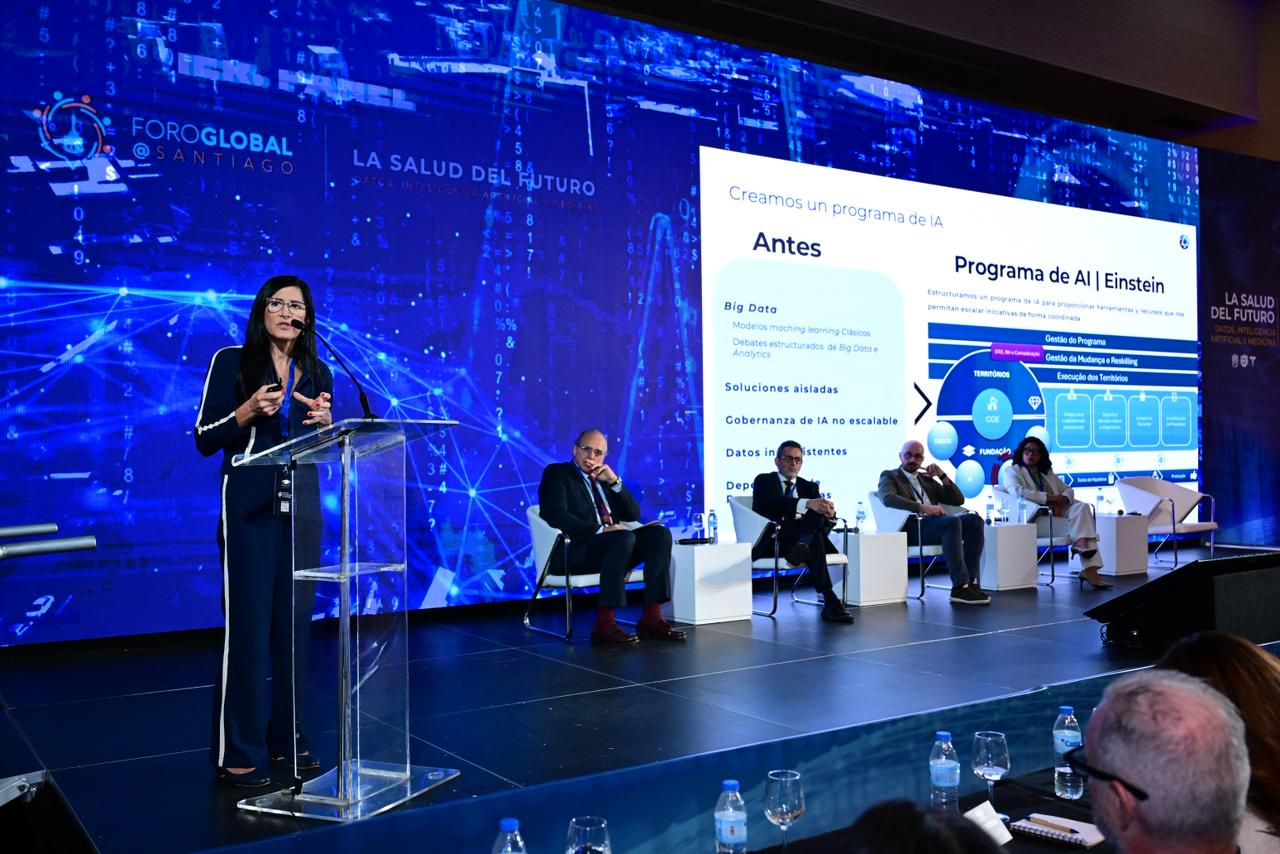
Seguimos explorando las fronteras del conocimiento, donde la mente humana y la inteligencia artificial comienzan a converger. A continuación, damos paso a nuestro segundo panel, Neurociencia e Inteligencia Artificial. Esta sesión será moderada por la doctora Mariam Saler, directora ejecutiva del Instituto de Tecnología e Innovación, Ed Kaplan, del Illinois Institute of Technology.
Nos acompañan como panelistas el doctor Nicolás Hatzopoulos, PhD, profesor A. J. Carlson en Biología de Organismo y Anatomía del Instituto de Neurociencias de la Universidad de Chicago, y el doctor Samuel Bolchenboom, MD, PhD, profesor de pediatría, jefe de la sección de informática biomédica, director asociado del Instituto de Medicina Traslacional, director asociado de investigación informática y decano de educación de maestría médica de la Universidad de Chicago. Un espacio para comprender cómo la inteligencia artificial está ayudando a descifrar uno de los mayores misterios, el cerebro humano. Acompáñenos en esta fascinante conversación.
Voy a tratar de hablar lentamente. Estamos muy emocionados de estar aquí. Como mencionó nuestra amiga, la agente de inteligencia artificial, mi nombre es Mariam Saler, y soy la directora ejecutiva del Instituto de Kaplan, que es el Instituto de Entreprenucia y Innovación del Instituto de Tecnología de Illinois en Chicago.
En esa capacidad, trabajo en la desarrollación del trabajo. Muchas veces hoy, han escuchado a la gente decir cuánto importante es entrenar a nuestro trabajo en estos nuevos herramientas que tenemos para innovar. Y así, mientras apoyo a las empresas, más generalmente, ayuda a hacer investigación fuera de las instituciones, mucho de mi enfoque ahora mismo está en desarrollar competencias digitales en el trabajo de salud.
Y lo hacemos en colaboración con los sistemas de salud. Hoy, para esta conversación, tengo a dos de mis… Tengo a mi antiguo mentor, Nico Hatzopoulos, que es profesor de investigación en la Universidad de Chicago, y un colega mío, alguien con quien he trabajado en muchas capacidades diferentes, Sam Volchambom, aquí para hablarles sobre investigación, investigación en la neurociencia, y más ampliamente, investigación en la medicina, y algunos de los desafíos que han experimentado en la investigación en el mercado. Estoy muy emocionada por tener esta conversación.
Al escuchar las otras conversaciones hoy, me ocurrió que la innovación y la descubrimiento sucede en todos los lugares ahora mismo. Escuchaste a Mark, antes de hoy, hablar sobre cómo hay un nivelamiento del campo de juego. Todavía hay un montón de investigación muy interesante realizada en laboratorios, en laboratorios de investigación en las universidades, pero no es por ningún modo donde toda la innovación está sucediendo.
Así que este es un momento en el que realmente necesitamos unir esos mundos y tener clínicos que trabajen más cercano con investigadores, pacientes, incluso. Así que escucharemos un poco de todo esto durante la conversación de hoy. Así que, de nuevo, creo que ya he mencionado esto.
Este panel es sobre la neurociencia. Así que pensé que traería a Nico aquí para venir y hablar sobre interfaces de computadores cerebrales. Hay muchos tipos diferentes de interfaces de computadores cerebrales ahí afuera.
Los que probablemente estén más familiares con ellos como clínicos serían, digamos, simuladores de cerebro profundo. Es un dispositivo médico que es usado para tratar la enfermedad de Parkinson y han estado por un tiempo muy largo. Yo, cuando trabajé con Nico y con una compañía de iniciativas llamada Cyberkinetics Neurotechnology Systems, y lo escucharemos más, trabajamos en interfaces de computadores cerebrales para restaurar el movimiento.
Y escucharás un poco de ese trabajo y de dónde se ha ido. Así que hemos estado trabajando en ello por más de 25 años ahora. Así que es bastante trabajo.
Después de que escuches de Nico, escucharemos de Sam Volchenbaum, y él expandirá más allá de la neurociencia y hablará sobre investigación médica y el papel de los datos, agregando datos y realmente avanzando ese tipo de trabajo. Y los datos son realmente importantes. Hablamos mucho sobre inteligencia artificial hoy.
Los datos son realmente importantes. Sin los datos, realmente no puedes construir los modelos que te puedan dar las inspecciones que necesitas. Así que escucharás lo difícil que es hacer eso.
Bueno, en ese sentido, voy a tener al Dr. Hatzopoulos venir y compartir un poco de su investigación con usted. Hola, gracias. En primer lugar, quiero agradecer a Giselle Castillo Varemis.
Empecé a mencionar a Varemis. Puede ser dominicana, pero en espíritu es griega. Y también a su asistente, Kaya, que ha sido realmente maravillosa.
Quería empezar hablando un poco de mi background. He estudiado durante muchos, muchos años. Y sigo haciendo este tipo de investigación básica sobre cómo el cerebro controla los movimientos.
Empecé mirando los movimientos del brazo, y me mudé a los movimientos de las manos y, más recientemente, los movimientos de la lengua. Y lo que realmente me interesa es, ¿cuál es el código? ¿Cuál es la lengua que el cerebro usa para controlar estas diferentes partes del cuerpo? Si piensas en un código, como el código Enigma que usan los nazis, eso es lo que intentamos descifrar en el cerebro. Y eso realmente involucra dos componentes.
Uno es, ¿cuáles son los elementos del código? ¿Son letras? ¿Son 1s y 0s? En el cerebro son, típicamente, señales eléctricas de diferentes tipos, de los que no voy a hablar. Pero, ¿cuáles son exactamente los elementos de ese código? Y, más importante, cuando esos elementos se unen para formar información, ¿qué tipo de información se proviene de ese código sobre movimiento? Eso es lo que he estado haciendo durante casi 40 años. Pero, en los últimos 90s, junto con mi advisor postdoc, pensamos, bueno, si entendemos este código, ¿podemos usar esta información para, en tiempo real, controlar los dispositivos, instantáneamente descifrando esa información del cerebro para controlar cualquier dispositivo externo? Ahora, Miriam ha hablado de las interfaces computadoras del cerebro, en definitiva, cualquier tipo de interfaz entre el cerebro y el mundo exterior, computadoras, máquinas, lo que sea.
Pero la mayoría de los dispositivos que han escuchado, como el estimulador del cerebro profundo, y quizás el más sucesivo, en mi opinión, es el implante coclear para la gente de edad muerta, que ha estado alrededor desde los 60s. Esos invuelven en la transmisión de información, estimulando al cerebro. Lo que estamos hablando hoy es lo contrario.
Estamos tratando de leer información del cerebro, el intento volitional de la gente, como en términos de lo que quieren hacer, en términos de mover su cuerpo. Así que la gracia de, en mi opinión, las interfazes computadoras del cerebro, como estoy hablando de ellas, es proporcionar control fluido y dextero de la mano y el brazo, o la lengua, o lo que sea. Y eso todavía no ha pasado.
Aunque estamos llegando allí. Todavía necesitamos abordar dos problemas importantes. El control fluido, al parecer, se distribuye a través de muchos, muchos neurones.
No me sorprenda, pero a través de muchas áreas del cerebro. Si se concentra en el córtex, que se muestra aquí, todas esas áreas coloradas están involucradas en algún modo con el control fluido. Así que estamos hablando de casi la mitad, o incluso más de la mitad del córtex está involucrado en algún modo con el control fluido.
Y aún así, lo que estamos haciendo es poner implantes eléctricos en una área específica, grabando desde muy pocos neurones para intentar controlar un dispositivo. Y creo que esa es una área que necesita expandirse, grabar desde más neurones, desde más áreas. Y luego, el otro desafío para realmente darle ese control fluido y dextero es la incorporación de la kinestesia, el sentido de movimiento de tu cuerpo.
Probablemente no hablábamos de esto en la escuela como uno de los sentidos, pero este es un sentido crítico importante que origina de los músculos, de los jointes, y de los tendones. Y esto te dice dónde está tu brazo y tu mano en el espacio. Incluso cuando mi ojo está cerrado, sé dónde está mi brazo y mi mano.
¿Cómo lo sé? Y eso es crítico y importante, y no hay interfaz de computadora de cerebro que lo incorpore. Entonces, ¿qué es exactamente una interfaz de computadora de cerebro en el contexto de lo que estoy hablando? Realmente se compone de cuatro componentes. Empieza con algún tipo de electrodo o algún array de sensores.
En nuestro caso, es un array de electrodos que se muestra allí. Te da el tamaño, el sentido de la escala. Se compone de 100 pequeños electrodos.
Y de eso podemos grabar desde los neurones únicos. En nuestro caso, el córtex motor. Y de eso podemos generar… De estas grabaciones, cuando una persona piensa en moverse o planea moverse, lo que obtienes son estos señales, que son básicamente pequeños trenes de pulso, casi como un señal digital de uno y cero, donde las pequeñas marcas verticales que ves allí son cuando los neurones explotan o crean potencial de acción, que es cuando está encendido.
Y cuando está desactivado, no ves nada. Entonces, son simplemente estos trenes de pulso a través de muchos, muchos neurones. Ese es el primer componente.
El segundo es decodificar esos señales. Entonces, ¿cómo sé qué significa eso en términos de lo que el sujeto quiere hacer? Y entonces, eso es donde pasamos mucho tiempo trabajando, son los algoritmos de decodificación. El tercero es el dispositivo de salida, que es, una vez que hemos decodificado ese señal, como sabemos lo que el sujeto quiere hacer, tenemos que translacirlo a algún tipo de dispositivo, y eso puede ser un cursor en una pantalla de computadora, puede ser un dispositivo robótico, puede ser un dispositivo prostético, puede ser incluso tu propio brazo en la mano.
Y por último, el feedback sensorial. Y este es un área que he ignorado por muchos años, pero es críticamente importante. Y cuando movemos nuestros hombros en el espacio, dependemos de la visión, por supuesto, para ayudarnos a guiarlo.
Y si hacemos un error, lo corremos con la visión. Pero también tenemos esta kinestesia que ya mencioné, y el sentido de toque. Cuando agarras un copo de café, lo sientes, y no pones demasiada presión en él, para que no rompas el copo, o demasiada presión para que caiga.
Entonces, estos son los cuatro componentes que creo que son críticos para una interfaz de computadora cerebral. Y lo que estamos hablando aquí es, yo debería haber empezado con esto, diciendo, ¿a quién estamos tratando de ayudar? Estamos tratando de ayudar a la gente con discapacidad motor severa, a los pacientes heridos de espina, a la gente con ALS, a la gente con ciertos tipos de estrope, lo que se llama la síndrome de confinamiento, donde no pueden mover ninguna parte de su cuerpo, y también a los amputados, a la gente sin espinas, o partes de las espinas están perdidas. Entonces, les dije que en los últimos 90, empezamos a pensar sobre este problema de tomar estos señales, leer estos señales del cerebro para controlar el dispositivo.
Y eso llevó a una empresa que formamos en los primeros 2000, llamada Cyberkinetics, y fuimos uno de los primeros a entrar en este juego, y Miriam fue instrumental en trabajar con los subjetos y tratar de mostrar la prueba de principio de que esto funcionaría. Entonces, fue un éxito científicamente, mostramos que podíamos, y estos son pacientes heridos de espina, personas con ALS y síndrome de confinamiento, que podían controlar los dispositivos. Simplemente por pensamiento.
No fue un éxito como negocio. Y nos volveremos a eso, tal vez, más tarde. Así que ese fue el trato del cerebro como parte de Cyberkinetics.
Luego, si ahora vamos a… No recuerdo ahora, probablemente fue hace 10 años o así, la gente avanzó esta tecnología en la Universidad de Pittsburgh y permitió a una persona con ALS controlar este brazo robótico, que parece algo como un brazo humano, tal vez no exactamente, pero está llegando allí. Y, a través del pensamiento, el sujeto está agarrando el objeto y se mueve a otra localidad. Así que este era el estado del arte hace 10 o 12 años.
Y esto es puramente a través del pensamiento. Genial. Así que ahí estamos.
Pero más recientemente, nos dimos cuenta de que, si vas a agarrar objetos, una de las cosas que necesitas, como mencioné, es el toque, ¿verdad? Porque necesitas saber cuánta fuerza se aplica en un objeto. Y así, mis colegas aquí, junto con la gente de la Universidad de Pittsburgh que inició esta idea, fue para aumentar estos sistemas con el sentido del toque. Ahora, ¿cómo se hace eso? Usamos otro array de electrodos, un set de arrayos de electrodos, no en las áreas motores, sino en las áreas sensoriales que encodan información sobre el toque.
Y esta vez, en lugar de grabar señales, vamos a traer señales eléctricas a esa parte del cerebro y ver si los subjetos humanos se sienten como si estuvieran sintiendo algo. Y remarcablemente, en realidad esto muestra, si miras al cerebro, la zona roja es la zona motora, y detrás de ella es la zona amarilla, la zona somatosensorial. Se sienten junto a uno al otro.
Uno está involucrado en el control del motor, y el otro está involucrado en el sentido del toque. Y así, así como la kinestesia, de hecho, debería decir. Y, remarcablemente, cuando trajimos la estimulación a un microelectrode específico, el subjeto reportaba que sentía algo en su dedo.
Lo cual es sorprendente cuando lo piensas. Y, y, usando la FMRI, antes de la implantación surgical, podíamos mapear la zona de la mano, porque hay una hay un mapa del cuerpo en el cortex, y con la tecnología de la MRI podíamos mapear la zona de la mano para, entonces, ayudar a los surgicos, a los neurosurgicos, a poner los arroyos electrónicos en el lugar correcto, para que pudiéramos estimular el dedo, el dedo índice, el dedo medio, y así sucesivamente. Entonces, aquí está la idea.
La idea, con el toque normal, por supuesto, hay sensores en los dedos y en la piel que son activados cuando tocas algo, les dan potenciales de acción hacia arriba, a través de los nervios, a través de varias estructuras subcórticas, y al final, hasta el cortex somatosensorial. Y la idea ahora sería reemplazar eso con un brazo robótico en la mano, con sensores en la mano robótica que recogen el señal de toque y lo traen directamente al cortex somatosensorial. Así que esa es la idea básica de la parte del toque.
Ahora tenemos un sistema cerrado que está grabando desde el cortex motor para controlar el dispositivo. Cuando la experiencia del sujeto interacciona con un objeto, como agarra un copo de café o algo, los sensores en la mano robótica entonces sentirían eso y darían estimulación al cortex somatosensorial, dando al sujeto el sentido de toque y permitiendo al sujeto ajustar la presión que aplican en el copo. Estoy bien.
Así que esto, ¿Puedo pausar esto? Bueno, de todos modos, lo que ven aquí es uno de los subjetos de la Universidad de Pittsburgh que está bloqueado. La experta está tocando los dedos de la mano robótica y el sujeto Index Middle Middle Middle Ring Ring Index Index Ring Ring Pinky Middle Index Pinky Pinky Middle Pinky Bien. De hecho, no quiero ir, quiero ir hacia atrás.
¿Cómo voy a ir hacia atrás? Voy a parar aquí por un segundo. Así que, ahora hemos demostrado que el sujeto puede experimentar un sentido de toque al estimular el electrónico y es muy localizado a dígitos específicos. No se siente completamente natural.
Debería reconocer eso. Los subjetos reportan diferentes palabras, como dicen, bueno, es un poco picante o es un sentimiento de sonido picante. Nunca duele, pero no es completamente natural, típicamente.
Aunque uno de nuestros subjetos era un jardinero, amaba trabajar en el jardín, y cuando estimulamos un electrónico, él dijo, oh, se siente como si mi mano estuviera en un bosque verde, como que estoy sintiendo las partes del árbol. Se sintió natural. Para ese un electrónico, se sintió muy natural.
Bueno, ahora lo que intentaremos es usar el DCI bidireccional y ver si el control que les mostré anteriormente con la mano robótica mejora cuando estimulamos. Verán dos videos lado a lado, uno con estimulación y uno sin estimulación. Con estimulación, tendrán un sentido de toque y uno sin.
Y probablemente podrán tener un sentido ya que la persona sin estimulación se mueve un poco y tiene dificultades en agarrar el objeto. Porque es como si tu mano está dormida, ¿verdad? Como si te duermes, si la mano está dormida y se siente duro, no puedes, eres un poco aburrido y tímido cuando agarras cosas. Eso es lo que el BCI a la derecha es como.
Entonces, ves que no es suficiente para ver lo que estás interaccionando con. Tienes que poder sentirlo. Y sentir es muy importante.
El sentido de toque es muy importante. Y eso es una de las razones por las que es importante. Si queremos construir un sistema clínicamente viable, ¿qué significa eso? Queremos algo con capacidades básicas y funcionales para permitir al objeto se vestir, se alimentar, se dormir.
Y esa adición de toque creo que será muy importante. Así que creo que eso es todo. Gracias.
A veces es bueno ser succincto. Muchas gracias, Nico, fue maravilloso y estoy segura que tienes muchas, muchas preguntas para él, así que tendremos tiempo para preguntas y respuestas después. Pero antes de irnos, tendré a mi segundo colega a venir.
Quería decir que el cerebro es uno de los órganos más complejos que tenemos y probablemente no es sorprendente que muchos artificiales, los algoritmos que se basan en los sistemas artificiales y los algoritmos que todos escuchan vienen de la neurociencia. Tal vez hayas escuchado de las nubes convolucionarias, por ejemplo. Bueno, inicialmente se desarrollaron para entender cómo funciona el cerebro, modelos computacionales para entender cómo este web complejo de neuronas interaccionan con los demás.
Así que para avanzar hasta hoy, y la mayoría de los neurocientistas que hacen experimentos extraen datos del cerebro y un montón de ellos, y tienen que usar formas sofisticadas para realmente entender ese dato. Así que eso realmente me lleva al tema de datos, que es el segundo tema para hoy. Y, analizando todo ese dato es nontrivial.
en casos en los que no tienes mucho dato o muchas pacientes y quieres crear resultados estatísticamente relevantes para que puedas avanzar en la ciencia, hay algunas complejidades en hacerlo. Así que mi segundo colega, Sam Volchenbaum, va a venir y va a hablar un poco sobre eso a través de su investigación en la Universidad de Chicago. Bienvenido.
Gracias, Miriam, y gracias, Giselle, por la invitación de venir hoy. Estoy muy emocionado de hablar con usted hoy. Voy a intentar recordar hablar lentamente, que no es mi primera forma de hablar, así que voy a intentar hacerlo.
Así que soy un oncólogo en la Universidad de Chicago. hijos con cáncer y mi motivación para el trabajo que hago viene del hecho de que el cáncer pediátrico es muy raro. Simplemente no vemos mucho de él, gracias a Dios.
Pero para hacer progreso en el cáncer pediátrico hemos tenido que gastar mucho esfuerzo tratando de recoger datos mejores. Les daré un ejemplo. Si un niño apareció en 1960 con leukemia, ese niño fue enviado a casa con unos esteroides y les dijo que tendría unos dos o tres meses para vivir y 100% de esos niños acabaran muriendo.
Ese mismo niño hoy en día en muchas partes del mundo tendrá un 95% posibilidad de ser curado de su leukemia. Ahora, ¿por qué sucedió esto? ¿Nuevas drogas, mejores formas de desarrollar nuevas medicinas? No. Todavía usamos la mayoría de las mismas drogas que teníamos en los 60s y los 70s, pero lo que aprendimos fue que necesitábamos tratar a niños en todo el mundo de una manera muy similar y recoger esos datos y unirlos juntos.
Y al recoger datos y unirlos y estudiarlos, puedes aprender sobre enfermedades raras y entonces puedes hacer mejores tratamientos. Así que usamos las mismas drogas, pero las usamos mucho más inteligente. Las usamos para entender cuáles niños necesitan más medicina, cuáles niños necesitan menos, y así sucesivamente.
Así que, mientras hable hoy, quiero que piensen sobre esta idea de enfermedades raras y sobre cómo realmente creamos una cultura en el mundo en la que la gente quiere recoger y mantener sus datos y no compartirlos. Y es muy difícil sacar datos de nuestros sistemas. Piense en todas las formas manuales en las que tenemos que copiar, copiar y escribir objetos de los recordos No tenemos buenas estándares para comparar los datos juntos.
Cómo alguien recoge datos aquí puede ser diferente de cómo lo recoge a un millón de kilómetros y, especialmente, alrededor del mundo. Y hace muy difícil responder nuestras preguntas de investigación. Así que, hace 10 años, formé mi laboratorio Data for the Common Good y lo que hacemos es que intentamos construir comunidades y plataformas y ecosistemas que maximicen cómo podemos compartir datos para enfermedades raras.
Verán aquí, no hay una enfermedad que no sea la enfermedad de Crohn ni la enfermedad de Leukemia o la enfermedad de Crohn. No importa. Los mismos conceptos se aplican para cómo pensamos en recoger y compartir datos.
El trabajo que hacemos es a través de muchas áreas y voy a pasar el tiempo principalmente hablando de nuestra Comisión de Cáncer Pediátrico. Pero lo que les digo hoy es verdad para nuestro trabajo en formas raras de diabetes o la Comisión de Cáncer Pediátrico un esfuerzo de epilepsia monogénica que estamos haciendo con la Iniciativa de Chan Zuckerberg. Estamos trabajando en otras áreas como la penetración de heridas cerebrales.
Estamos trabajando en determinaciones sociales de salud y causas ambientales de enfermedades y así por delante. Pero todos los mismos conceptos se aplican y creo que cuando escuchan la historia sobre el cáncer estas otras áreas serán similares. Escuchen, las historias y esto es muy importante.
La gente no quiere compartir datos. ¿Por qué un hospital quiere dar sus datos o compartirlos? La estructura no está normalmente allí. La forma más común para obtener datos es de individuales en las que las personas piden sus datos.
Ahora, yo no sé sobre usted, pero cuando yo pido mis datos y me envían una cd, no tengo realmente No tenemos una buena manera de mirar los datos en ese CD, y aun así es un estado de arte para mucho compartimiento de datos en el mundo. Ahora, se pueden conseguir instituciones que compartan datos poniéndolo fuera de su recuerdo de medicina en una forma estandarizada, pero eso también es muy difícil porque tienes que ir a cada hospital y conseguir un acuerdo con cada hospital para compartir sus datos. Y como dije, la mayoría de los hospitales no realmente quieren compartir sus datos.
Ahora, tenemos estas redes de salud que están emergiendo, especialmente en los Estados Unidos, y estas redes de salud se unieron realmente para hacer más fácil compartir datos entre los hospitales, pero hagámoslo real. ¿Cuál es la razón por la que construimos esto? Es para mejor financiamiento, es para mejor insurrencia, es para mejores formas de recoger dinero. Esas redes no están siendo usadas para la investigación.
Así que lo que espero convencerles hoy, y espero que también a través de nuestro panel, es que la nueva manera de pensar sobre los datos es muy emocionante y es a través de los datos mediados por los pacientes. Los pacientes deberían controlar sus propios datos. Yo debería poder decir quién tiene acceso a mis datos de salud, quién tiene acceso a mis datos de Fitbit y Garmin, quién tiene acceso a mis datos de interfaz del cerebro.
Yo debería tener ese control, y creo que, a través de nuestra discusión hoy, espero que ustedes también estén convencidos de eso. Ahora, mi grupo ha recogido datos de todo el mundo. La gente me dijo al principio que nunca podrían compartir datos con otros países.
Bueno, ahora estamos compartiendo datos con muchos países en todo el mundo, en seis continentes, y algunos de los países listos aquí. Y eso sólo toma trabajo duro. Cuando vas a un abogado y le dices, hey, nos gustaría compartir datos con tu institución, ¿qué dice el abogado primero? No.
Es donde empiezan los abogados. Pero eso está bien, porque tengo abogados en la Universidad de Chicago que empiezan con sí. Y lo que hacemos es que trabajamos de regreso y de regreso, y llegamos a un acuerdo sobre cómo vamos a compartir datos que protejan a todos.
Esto no es tan difícil de hacer. Sólo se necesita gente motivada y que realmente quiera que el trabajo esté hecho. Así que ahora tenemos datos de todo el mundo en nuestro Data Commons que hemos llevado juntos para compartir.
Ahora, estas son las diferentes áreas en las que trabajamos. Pueden ver en el azul nuestras diferentes áreas de cáncer, y ahora en el fondo, en el naranja, son algunas de nuestras nuevas áreas de enfermedad rara. Pero el punto que quiero hacer aquí es que tenemos que tener una manera regimentada para hacerlo.
Así que lo primero que hacemos es construir un modelo de datos. ¿Qué es un modelo de datos? Bueno, si en los Estados Unidos decimos que algo está en la etapa 1, 2 y 3, y en Italia está en la etapa A, B y C, tienes que encontrar una manera de combinar esas cosas. Porque quieres tomar esos datos de Italia y de Alemania y del DR y de los Estados Unidos, y quieres poner esos datos en un lugar.
Tienes que conseguir que las personas se agreguen a cómo hacer eso. Esto no es un trabajo fácil. Antes de la COVID, solíamos cerrar grupos en una habitación y decíamos, no nos vamos hasta que tengamos un modelo de datos.
Una vez tuvimos un argumento de 20 minutos sobre si la cara era parte de la cara o si era parte de la cabeza, porque en Europa lo consideraron una cosa y en los Estados Unidos la otra, y en realidad tuvimos que llegar a un consenso sobre cómo íbamos a clasificar esa parte del cuerpo. Entonces, para cada uno de estos grupos, construimos una consorcia. Una consorcia es simplemente un grupo de personas que han venido juntos para agregarse a cómo vamos a compartir los datos.
Estas son las personas que están poniendo sus datos. Tienen la habilidad de gobernar cómo usamos los datos, y eso es realmente importante, porque permite que las personas se sientan cómodas en poner sus datos en la Comisión, sabiendo que pueden ser parte de la consorcia y cómo lo compartan. Este es nuestro sitio web.
El enlace a todo lo que estoy diciendo hoy está en la parte de abajo. Puedes ir a verlo después si quieres, pero tenemos un proceso en plazo que nos permite construir el diccionario, construir la comunidad, poner el compartimiento de datos en lugar, recopilar los datos y luego compartirlos de nuevo. Esto no es trivial, porque ahora podemos recortar más de 70 papeles que han sido escritos usando datos en la Comisión, y el número de proyectos y papeles que salen de estos datos está creciendo con el tiempo.
Pero lo que realmente importa, por supuesto, es el impacto en nuestros pacientes. Esto es solo una historia sobre una enfermedad llamada neuroblastoma, que es un tumor que los niños y las niñas tienen en su abdomen y en su tórax. Así que recopilaron 11,000 pacientes de todo el mundo, y ningún país tenía suficiente datos.
Esta es una enfermedad que tal vez 400 niños en Estados Unidos reciben cada año. Así que recopilar 11,000 pacientes de todo el mundo fue mucho trabajo. Tuvimos que desarrollar un estándar, tuvimos que poner los datos juntos, pero luego esos datos fueron usados para hacer algo remarcable.
Lo que encontramos es que para muchos de los niños, entre los 12 y los 18 meses, recibían demasiada terapia. Y lo que pudimos decir de esos 11,000 datos de pacientes es que podíamos mover la línea para tratar a los pacientes con enfermedad de los 12 a los 18 meses, para quien necesitara más terapia. Así que desde que este papel fue publicado, hemos sido capaces de tomar a muchos niños y darles menos terapia.
Eso es menos toxicidad, eso es menos efectos a largo plazo de la quimioterapia, y todavía podemos salvar el mismo número de niños. Así que este es solo un ejemplo en el que estamos teniendo un impacto real en los pacientes recopilando estos datos. Quiero hacer el punto aquí de que mi equipo realmente proporciona un servicio para compartir los datos.
La gobernanza de cómo los datos son usados es dejada a las consorcias individuales que traen los datos. Las consorcias son las que deciden cómo los datos se usan. Y quiero hacer otro punto.
Tenemos cuatro grupos de consultoría con los que trabajamos. El último se llama nuestro panel de consultoría de experiencia vivida. Este es un grupo de pacientes, padres y advocados que vienen a reunirse con nosotros un par de veces al año y nos ayudan a tomar mejores decisiones sobre cómo los datos se usan.
Los pacientes son los mejores advocados para cómo los datos van a ser usados. Quieren que usemos sus datos. Quieren hacer que sea más fácil compartir y si escuchamos a los pacientes y sus advocados y niños, ellos nos dirán las mejores formas de usar sus datos.
Quiero volver a esta idea del paciente como abogado de los datos. La tecnología está ahí y es fácil ahora permitir a los pacientes decidir cómo van a compartir sus datos. Tenemos un proyecto ahora donde estamos mirando a los sobrevivientes de cáncer y les hemos puesto una aplicación en su teléfono que les permite darnos los datos de cualquier hospital en el que han sido vistos.
Nosotros tomamos esos datos, los ponemos en un único lugar y usamos esos datos para ayudar al paciente a entender cómo puede tomar la propiedad sobre su cuidado y sobre su sobrevivencia. Imaginen a una chica de 12 años que tiene linfoma de Hodgkin que le da radiación al pecho y luego se ha curado de su linfoma de Hodgkin. Es una enfermedad muy curable.
Imaginen a esa misma chica que tiene 25 años. Ella tuvo cáncer hace 13 años. Se ha graduado.
Tiene un trabajo. Puede tener una familia. ¿Está pensando en si necesito un mamograma? ¿Necesito tener extra pruebas porque tuve cáncer? Así es como vamos a ayudar a pacientes como esa.
Vamos a empoderarlos a tener control sobre sus datos y control sobre su salud. Y eso es lo que intentamos estudiar. Entonces, pienso en muchas diferentes fuentes de datos, no solo datos de recortes de salud electrónicos, sino datos de consenso, datos de resultados reportados por pacientes, estudios que un paciente puede realizar sobre cómo duermen, cómo piensan y cómo se sienten, usos, el tipo de datos que acabamos de hablar y datos de aplicaciones y comunidades como Facebook y otros lugares que tienen mucha información sobre pacientes.
Las herramientas de la Inteligencia Artificial que estamos construyendo hacen que sea mucho más fácil combinar esos datos y usarlos para cosas de fondo, como construir mejores aplicaciones, hacer mejor investigación y simplemente cuidar mejor a los pacientes. Así que, a medida que avanzamos, creo que tenemos que pensar sobre este nuevo ecosistema de recopilar y compartir y analizar datos. Pero todo empieza con el paciente y con buenos datos.
Y si lo haces, todo lo demás vendrá. Todo el dato que recopilamos está públicamente disponible en un portal de búsqueda. Ahora, eso no significa que puedas entrar y ver datos de cualquier individuo, pero puedes ver los datos agregados.
Alguien puede ir a nuestro sitio web y ver los números de pacientes que están allí. Y esto ha sido realmente útil para los investigadores que ahora, por primera vez, pueden saber si tienen suficiente pacientes para estudiar. Si hay suficiente pacientes en nuestra Comisión, le ponen una simple solicitud.
Nuestro consorcio revisa la solicitud y, si es apropiado, le dará el dato después de que siga un acuerdo de uso de datos. Esto ha funcionado bien. Y, como les he mostrado, tenemos casi 75 libros ahora y este número sigue creciendo.
Así que este es mi equipo en la Universidad de Chicago. Esto solo funciona porque tenemos muchos tipos de talento, de programadores a expertos en los estándares de datos, a gestionadores de proyectos, comunicaciones, gobernanza. Y, al unir a todos estos personajes y repetir este proceso de vez en cuando, hemos podido tener éste éxito en muchas áreas diferentes en todo el mundo.
La mayoría del trabajo que hacemos está financiado por las fundaciones. Estas fundaciones ganan dinero y han visto el valor de construir estas plataformas para compartir datos. Por supuesto, nos encanta obtener datos de fuentes como el Instituto Nacional de Cáncer, pero como esas fuentes han sido más difíciles de obtener, los grupos de pacientes han realmente avanzado y nos han ayudado a obtener más financiamiento para este tipo de trabajo.
Pero el advocado más importante son los pacientes mismos. Son los mismos que nos dan los datos. Son los mismos que nos dicen cómo deberíamos usar los datos.
Y creo que el paciente necesita ser el centro del universo cuando se trata de cómo pensamos sobre el compartimiento de datos. Gracias. Estoy esperando nuestra discusión.
Gracias, Sam. Es genial. Y gracias por el trabajo que ha hecho.
Bien, entonces, vamos a… Tengo unas preguntas para nuestros panelistas y luego vamos a la audiencia y podrán tomar sus preguntas también. Entonces, vamos a volver al mundo de la neurociencia y empezaremos con Nico. Entonces, ¿cuántas veces la gente te pregunta sobre Neuralink? Sí, para aquellos que no lo saben, Neuralink es una compañía que Elon Musk empezó hace unos años.
Elon es una persona muy inteligente. Él no tendría que reconocer gente como nosotros que empezó esto hace 20 años antes de que lo hiciera. Pero, a pesar de eso, Neuralink es es tratando de abordar el mismo tipo de problema y plantando electrodes en áreas motores del cerebro para controlar dispositivos.
Y es una tecnología Tiene ciertos beneficios contra la tecnología que estamos usando. No tengo nada contra eso, en realidad. Creo que es genial.
Y tiene mucho dinero. Tiene mucho dinero, así que tiene la oportunidad de conseguirlo. La razón por la que lo trajo es que Neuralink no es la única compañía que está entrando en el mundo de las interfaces computadoras del cerebro.
Pero hay muchas preguntas sobre qué es el hype, qué es realmente lograble. Y tienes la perspectiva única de ser un investigador y tener un buen sentido de lo que podemos extraer del cerebro. Entonces, desde tu perspectiva, ¿qué es el hype y qué es real? ¿Qué realmente puedes hacer con la información del cerebro? Sí, creo que lo que puedes hacer es extraer intenciones, intenciones motorizadas.
La mayoría se ha enfocado en el reloj motorizado. Ha habido un poco de trabajo en la cognición pensamientos, emociones, pero no realmente tanto. No creo que sea necesariamente el hype, solo que no se ha hecho.
Pero creo que lo que es el hype es lo que Elon Musk está diciendo, que en el futuro para superar básicamente, él siente que estamos en guerra con la inteligencia artificial. Y la inteligencia artificial va a superar el mundo y nos convertiremos en lo que él llama humanos que se convertirán en gatos de casa. Nos convertiremos en pequeños organismos Y así, para abordar ese problema, él cree que necesitamos interfaz con los computadores y la inteligencia artificial para que podamos florecer y no ser tomados por la inteligencia artificial.
Eso parece ser el hype para mí. Un poco. Creo que lo agrego a ti.
Gracias, Nico. Sam, vamos a seguir con el tema de lo que es el hype. Tienes una perspectiva Acomodando a todos estos investigadores y clínicos agregando datos.
Probablemente has visto muchos casos de utilidad para la inteligencia artificial. Quizás en la decisión clínica, por ejemplo. Cualquier caso que puedas pensar.
Entonces, desde tu perspectiva, ¿dónde está la inteligencia artificial teniendo un impacto y dónde todavía está más en la etapa del hype? Sí. Hablamos un poco de esto a la cena la noche pasada. Creo que cuando la gente piensa en la inteligencia artificial, piensan que va a hacer algunas de estas grandes descubrimientos.
Y en la conversación esta mañana, hablaron de el juego AlphaGo y cómo Google diseñó un programa que podía jugar al juego AlphaGo. Pero si ves el documental sobre esto, es fascinante porque en un punto durante el juego, el computador hace un movimiento y, creo que se llama el movimiento 31 o algo así, y en algún punto la gente pensaba que el computador se fue a la locura. Como, oh Dios mío, el computador obviamente está fallando.
Por supuesto, el computador ganó y cuando regresaron, realizaron que el computador tuvo un movimiento que nadie había pensado en 2500 años, una nueva estrategia. Para mí, esa es la preocupación, ¿verdad? La preocupación es que alguien va a tener una inteligencia artificial y les diga o les da una medicina o les hace una terapia que no pueden explicar. Y creo que ese es el riesgo del hipótesis, es que no estamos en una posición para que un computador nos diga que hacer algo que nosotros mismos no podemos explicar.
Las redes neuronales son inmediatamente construidas para que no podamos explicar por qué nos dicen que hacer algo. Así que esto es, creo, un verdadero paradojo que estamos enfrentando ahora mismo. Para ser honestos, la manera en que la inteligencia artificial está teniendo un impacto en nuestros trabajos es muy mundana.
Está tomando notas copiadas y pasadas y las haciendo mejorar. Está escribiendo notas de aseguramiento para nosotros. Está haciendo muchas de las tareas mundanas que nos pueden dar tiempo para hacer otras cosas.
Pero el verdadero promedio de la inteligencia artificial será en el futuro, probablemente no en el futuro demasiado distante, en los próximos cinco años, en el que hará predicciones y nos diga cómo tratar a pacientes, pero nos diga por qué y nos diga la evidencia y exactamente por qué estamos haciendo eso. Entonces, estamos en un momento interesante ahora mismo cuando está en todos lados, todo es un objeto brillante, pero tenemos que tener cuidado en cómo lo usamos. Me agradecería que pudieras acercarte a la raíz, el por qué.
Eso haría un gran impacto. Así que vamos a pasar a la siguiente pregunta, que es el problema de los datos, específicamente en cuanto a la escasez. Entonces, incluso si miramos modelos de lenguaje grande, fue entrenado en tanto datos, y esa es una de las razones por la cual funcionan tan bien.
Pero cuando se trata de temas específicos, tal vez no funcionan tan bien, ¿verdad? Y eso es porque es agradable entrenar modelos en temas específicos, pero necesitas suficiente datos para hacerlo. Entonces, ejemplos de eso serían, bueno, vamos a seguir con ti, Sam, primero. Sabes, enfermedades raras.
Entonces, para hacer progreso científico, necesitas, necesitas realmente agregar datos de múltiples fuentes de todo el mundo, ¿sabes? Para llegar al tamaño de la muestra que necesitas. Entonces, ¿nos puedes dar algunos ejemplos? Tal vez incluso podemos empezar con tu ejemplo de neuroblastoma. Entonces, tal vez empezaste allí.
¿Qué desafíos experimentaste tratando de combinar datos de cuatro continentes, 11,000 pacientes? ¿Y cómo resolviste esos desafíos? En el corazón, esto es un problema humano, ¿verdad? Tienes que tener humanos que se unan a compartir datos, y tienes que tener gente con suficiente humildad para darse cuenta de que la manera en la que ellos recopilaron los datos no puede ser la única manera de recopilar datos. Entonces, uno de los mayores desafíos que enfrentamos es convencer a la gente de que todos podemos unirnos y encontrar una manera común para poner nuestros datos en un lugar. En realidad, la mayoría de mi tiempo a la parte humana de las cosas, a la construcción de la comunidad, a convencer a la gente de que podemos hacer esto juntos.
Y una vez que pasamos ese primer paso, una vez que obtengas a los técnicos, a los expertos de datos en una habitación, ellos lo resolverán. La parte difícil es llegar a esa fase inicial de decir que, sí, nosotros vamos a hacer esto. La otra cosa interesante es que la mayoría de los datos que empezamos a recopilar inicialmente son de los tratamientos clínicos.
Como saben, los tratamientos clínicos son formas muy regimentadas de datos que se llenan. Y la mayoría de la tiempo se hace con lo que me gusta llamarlo tecnología de cadera. Donde tienes tu EHR aquí y tu forma aquí y así copias y pasas de uno al otro.
Esto es una manera muy cruda y manual para hacer esto. El futuro es algo que empecé a hablar sobre, que es el recuerdo de salud electrónica record, rich data, so this is what we’re seeing now. This is solving our scarcity problem, even for rare disease.
It’s pulling a patient’s entire medical record from multiple sites, using AI to extract and analyze those data, and getting that what we now call real-world data into a place that it can be used for AI. Without getting the good data, you’re never going to have good AI and good results. So one of the challenges that we’ll talk about at the end, I think, is how do we get the best data to power our downstream innovation? Thanks.
And then we’ll turn it over to Nico. So when I was a graduate student in Nico’s lab, and while I was there, we worked with one human patient. And, you know, there really aren’t that many humans that get brain implants, right? So it’s really, really hard to generate insights that can be generalized and turn into meaningful scientific discovery.
So we did what we could, but that was a while ago. So how have things changed, Nico? And are we able to deal with the small sample size problem today? Yeah, that reminds me of one of our subjects. He’s very proud to think, to realize that he’s, you know, he’s at the frontier, and he’s like a pioneer.
He says there are more people that have gone to space than have had brain implants. So he feels very special. So I think that we’ve tried to address that problem by forming a consortium, as Sam mentioned, a group, basically a collaboration, a collaboration now with the University of Pittsburgh and Northwestern.
And so we have now a group of investigators with multiple subjects, and now we can do experiments, examine things, and then replicate them across sites using the same code base to test these ideas. And so now we have papers. In the old days, we would publish a paper with one subject.
Now we have papers with four subjects, and we can replicate. So it’s not, maybe it’s not the size that Sam has with 11,000 cases or whatever, but it’s better than one. Great, making progress.
All right, so the next topic will be, this is a topic I really care a lot about. So going back to our history, our joint history, Nico and I, the original invention that led to our product was developed at the University of Utah as a research technology. And it took so many years, more than 30 years, to get this product to market and, debatably, it’s not in the market yet, right? So translating research discoveries to market, especially when the discoveries or the technologies are very complex, takes a lot of time.
The federal government and the United States is really focused on identifying ways to accelerate that path to market and to really support researchers and working more closely with clinicians, patients, people in the community to work on the right problems. But, you know, let’s go back to Nico and ask him, you know, when you think about using brain-computer interfaces to restore movement and paralyze people and really get to market, what’s the biggest challenge? You know, what has been the biggest challenge in getting it out there? Well, I think one is economic and one is technical. On the technical side, what we want is, especially for the approach where we’re reading signals from the brain, we are implanting a foreign body in the body, in the human body, namely the brain.
Of course, there are foreign body reactions. The immune system kicks in. Gliosis and other things happen.
And what happens is over time we lose the signal. We stop being able to record the signal. So one of the technical challenges is to develop an electrode technology that is more biocompatible, that could last for, you know, 10 years at least, if not more.
So that’s a big technical challenge. We don’t have that yet. The economic challenge, which is we kind of face this, which I still think is a problem, is that the population, the market size for spinal cord injury, ALS, amputation, is tiny.
And so investors are not excited about investing this kind of money for such a small market. So how do you address that? I’m not really sure, unless you expand the market in some way. One possibility, but we would have to get a lot better than we are now, is to expand it to stroke, people with various kinds of stroke, even stroke that affects the part of the brain we implant.
Because like I showed you in my introductory slide, motor control is distributed across many brain areas. So if you have a stroke, middle cerebral artery stroke, that affects the motor cortex, you can implant the electrodes in another location and get almost the same kind of signal. So stroke might be a way to broaden that market.
That’s a good one. So let’s turn over to Sam. So from your standpoint, you know, we’re talking about research translation, right? So where has your work really impacted the translation of research in a meaningful way? And if you’ve experienced challenges, please share those with us.
Yeah, like I said, with rare diseases, the challenge has always been to collect enough data. And even now, we’re trying to get to rare subtypes of rare diseases. And that’s been really exciting, because as we put more and more data together for rare disease, we’re finding that there’s many different types of patients within that type of rare disease.
And as the president talked about this morning, you know, we need to create really good, customized ways of taking care of patients so that you’re treating the right patient with the right medicine at the right time. And it’s only by collecting data across many, many types of patients of many different backgrounds that we’re going to be able to understand how to take care of that patient’s tumor for that particular patient. So for me, the challenge has always been, how do we get enough variety of data on enough types of patients from all over the world? How do you have a diverse population? How do you make sure that you’re collecting data in a way that makes it easy to share? A lot of these are the challenges that are inherent to any data governance, which is extremely important.
But if you do that governance part correctly, you can power all the downstream analysis that you want to. So for me, the challenge for translation is way upstream. It’s with the governance.
It’s with the standards. And if you do those things right, the translation will fall into place. So that was a nice sequitur to our next topic, which is governance, trust, and patient agency.
I know that’s an area that you really care about, Sam. I’m really passionate about that as well. Depending on which country you come from, we have many countries represented here today.
The rules are different about who owns their data. But in the U.S., for a long time, health systems had access to patient data, and they ultimately had some ownership rights to it. So if companies wanted to – I’m sure you have some opinions, so I’d be curious to hear your perspective.
But if companies wanted access to that data, they could just go directly to a health system and have an agreement to get some data from them. That’s changing, I think, in the United States. So where are we today, Sam, in the United States? Certainly health systems are starting to really understand the value, the extreme value of the patient data they have.
And there are many cases where health systems have taken the data and they’ve monetized it or they’ve engaged with companies that perform a service, and then the company will get the patient data in exchange. But at the end of the day, as you started to say, the patient really owns their data. It’s up to the patient to decide how to use it.
And in the U.S., this is now becoming a much more powerful lever for patients to use. So if a patient decides they want to take their data from a hospital system and give it to somebody else, it’s up to the patient to decide how they do that. If the hospital is going to give the patient’s data away, it has to be done in a way that preserves that patient’s privacy and preserves the security of those data.
So I think the trend is really moving toward patient-controlled data, and I see this only growing. And I would encourage other countries, as they’re thinking about their own data ecosystems, to think about ways, whether it’s through policy or through law or legislation, to make sure that the patient is the primary owner of their data. Makes sense to me.
So how do you think about this? You’re a researcher. You’re collecting data. I don’t think you could probably identify a patient by looking at their neural data, right? No.
Tell me more about that. Yeah, I mean, if it’s de-identified neural data, which, what do we mean by neural data? Basically, it’s those little tick marks I showed you on the ones and zeros, as well as behavioral data or something they’re controlling. So it’s probably almost impossible.
In fact, you can’t differentiate that with animal data. Neural data is neural data, whether it comes from a human, from a monkey, from a rat, from a mouse, from whatever. So, yeah, it’s almost impossible.
And then do you take precautions not to include the patient’s name, you know, in your data set and things of that sort? Yes, we have to. Well, in publications, we have to do that. Now, and when I talk about it, now our subjects, in particular one of them, is extremely social and outgoing and wants to, so everyone knows him.
And so he has no problem sharing or at least telling people, the data you’re seeing comes from me. He has no problem. He loves it.
So, but it’s up to him. And to be, who owns the data? Who owns the research data? Public? Publicly owned because it’s sponsored by research, by the government? That’s a good question. Because we do submit for publications.
Now the trend is to put some data on repositories, public repositories. But I’m not actually, so I mean, so it does go out. So it is available.
But it’s de-identified data. Right. Just curious.
It’s also, I mean, you know, from a scientist’s perspective, like your data has value. You could keep doing studies on it and say, is it your data or is it a public asset? I don’t know. That’s the challenge.
Like now, journals will tell you, you have to give us your data. Put it, make it public, which you feel uneasy about because it took so much time and effort to collect. And Sam knows a lot about this, too.
All right. My last topic and then it’s questions for the audience. So advice to a Ministry of Health here.
So we are here. I think we do have some politicians in the room or some policymakers if we do. I wanted to say, so if you’re advising a Ministry of Health over the next five years, what advice would you give to prepare for an AI-driven future, both in terms of staying connected to research and building the infrastructure necessary to deploy innovation responsibly here in the Dominican Republic? Sam, do you want to start? Yeah, and I’ve talked about, I think I’ve talked about these areas already.
I think we have to have interoperability. So that means as you think about deploying resources around the country for collecting data, you should be thinking about the standards for how those data are collected. Standards have already been developed.
They’re easy to implement so that if you’re taking care of a kid out in the countryside and you have data on that child, it should be easily combined with data that you collected in a city on another child because it should all flow through a similar set of standards. That doesn’t mean the systems have to be the same, but the standards on how you collect data should be the same. There should be governance put in place that makes it very easy to understand how the data can be shared, what the patients are allowed to do with their data, what the institutions are allowed to do with their data, and I think putting that control of the data in the hands of the patient can be extremely powerful.
So getting the governance done early will also be important. And then thinking about an AI-driven future means that the data should be collected and somehow centralized. And I know that it’s difficult to centralize data because there’s ownership issues, there’s standards issues, but if you really want to be able to drive the health of a system through tools that are based on AI, you need lots of really good data.
And the way to do that is to collect it, standardize it, and centralize it. And if you’re thinking about a five-year time frame, these are all things that should be very straightforward and relatively easy to do if you think about them now. Thanks, Sam.
And then, Nico, from a researcher’s perspective, you know, how would you encourage, you know, since you have conferences in Greece, so what are different ways to encourage collaboration in the research domain between countries? What recommendations would you have? Well, it’s not just in Greece. I mean, I collaborate with lots of people around the world. In Italy, I have a collaboration, and, yeah, I mean, it only benefits everybody.
But getting back to your question about AI, an AI-driven world, I can speak as an educator. I don’t know if this is relevant, but there’s a tension in education about AI, because on the one hand, you need your students to learn about AI, because that’s the way the world is going to run. You need to learn how to prompt AI properly to get the right answers.
On the other hand, you want to make sure that these students learn something and are not stupid by the time they get their degree. So there’s this tension happening, at least at the University of Chicago. I’m sure you know about it, because we have to teach our students stuff, and then they have to tell us, do you know what you’ve learned, without using AI? And that’s a challenge.
How do you do that, especially if you have a large number of students? So there’s a tension there between do I use it or do I not use it for education, and it hasn’t really been resolved yet. That’s a really good point, and I think when it comes to emerging technologies like artificial intelligence, there’s value in exchanging best practices and working together to develop the right policies in education and research and everything. And so there’s a lot of value in bringing different people together here, for example, like today, to share those best practices.
So those are all questions I had for our panelists. Any questions from the audience? There’s also a lady up there. I don’t know if you have a microphone.
Hello. She’s over on the top right. Is there someone who has a microphone or is nearby that might want to go first? Okay, great.
Hi. Hello. So thank you for sharing your knowledge today.
That was amazing. My name is Stephanie, and I have a question for Dr. Nicolas, if that’s okay. So which is more difficult for you, developing like a project with systems that allow the movement of objects with the thought or sending signals to the brain so the sensations can be perceived? Perceived? You understand? And how long did it take you to get those amazing results? That was amazing.
I felt like I was watching a movie, like from Iron Man. Thank you. Well, stimulating the brain is considered to be a little easier than recording, and that’s why a lot of these technologies, like the cochlear implant, the brain stimulator, developed earlier.
It’s because, like I told you about this foreign body reaction that you get where the brain says, hey, there’s some foreign thing in my brain. I’ve got to get rid of it. And so you lose the signal you try to record from over time.
So I would say recording is harder. Control is harder than stimulation. Thank you.
Yeah. Other questions? There’s one, yes. I can, and I can repeat your question for the audience too.
So let me repeat that before you go. So our friend who’s a data and analytics person at a health insurance company or working for health, I forget that, but your question is, what is the day in the life of a patient who has one of these brain implants? Right. So, unfortunately, we do not have a viable system today that subjects can acquire on the market and use day to day.
There are some home, so basically what happens is the subjects come into our labs three times a week for four hours each time. They do these cool experiments and they go home. And that’s it, unfortunately.
There’s some home, for some of our subjects we have home applications where they can play with it. But it’s not helping them functionally. We’re not there yet.
And it’s going to take some work. Sure. Yeah, we were talking about hype earlier, you know, what can be accomplished and what can’t.
We’re a ways away with these technologies. All right, the next question. I’m not sure I caught that.
Did you hear that? Yeah, the question about is what sorts of educational strategies can be developed to help with data harmonization and combining data. And I didn’t have it on my slide today, but I usually have a talk about data literacy. And one of the things that we’ve tried hard to do is to train the community to understand the importance of collecting good data and to have good standards.
Because if we do our job well, we wouldn’t need to harmonize the data. Because the next person that collects data would look at the standards that exist, choose a standard, and collect their data in a standard that is already compliant. Our website has all of our standards on there.
Our data standards team spends a lot of time educating and training and helping communities collect better data. So data literacy and community engagement are extremely important. Because if you can convince people about the importance of standards, then it makes your job much easier, it makes the data much better, and it makes the downstream applications much easier.
Actually, to follow up briefly, at the University of Chicago, there’s what’s called the core. It’s a set of courses that we think all students should know. If they want to be educated citizens of the world, they need to know this stuff.
And it spans many different areas, the humanities and the sciences. Right now I’m part of a group looking at the question of data and computation and saying, hey, you know, this is something we need to make sure the students know before they go out in the world. So I think that that’s something that’s important.
Thank you. Yes, sir, one last question maybe, and then we’ll move on. Hello.
For Nicolas, Dr. Nicolas, I don’t know if you know the NMPA from China. They approved for commercial one Neuralink competitors this month. So in the other hand, Korea is working in a nanobot on neurons.
So what do you think in terms of the world singularity coming up when maybe the neuron and the nanobot and AI mix together? Yes. Yeah, in fact, I think I’ll answer your question correctly. Let me know if I’m incorrect.
I talked about the challenges of giving dexterous and fluid control, and we’re not there yet. But maybe that’s where AI can help us. So basically the idea would be it would be a hybrid system where the brain is providing the high-level information, saying, listen, I want to go here, and I want to grab a cup to drink it.
And then let AI take over the details, basically replace the spinal cord and all the other parts of the brain that we’re not tapping into to give you the fluid control to do what you want to do, but just relegate the brain and what the subject wants to the high-level stuff, which is, after all, that’s what you do day to day. You’re thinking about, okay, I want to grab this glass. I’m not thinking about the forces I’m applying on the finger.
That’s all being done unconsciously in the spinal cord and other parts of the brain. And basically AI can handle all that. Did I answer your question? All right.
So, yes, one last question. Hi. Thank you very much.
So this was an amazing, amazing presentation. Thank you very much. So my question is for Dr. Nicholas.
I just want to know, during your presentation, I could not stop thinking about the works of Chomsky. And my question goes related to patients can definitely be stimulated, you know, to work with the bio-machines, but can they develop this strategy? I don’t know how to say it exactly, but does this work for people that have never had movement, they have never had, let’s say, an arm or a leg? Yes. That’s congenitally born subjects without limbs or without, yeah, that.
Yeah, I don’t know. The short answer is I don’t know the answer. But we haven’t explored that.
I’m wondering. I don’t know. Yeah, I think I’m remembering a publication where they show that you can train other parts of your brain to control an effector.
So even if, you know, one thing is if you’re born without a limb, probably the area of your brain that controls that limb is not developed, maybe, right? And so it would be harder to extract the information from there. But there is some science out there that shows that you could probably retrain another area of your brain, right? Yeah, potentially, yes, except you, right. I’m thinking more on the sensory side.
If you’ve never, yeah, I don’t know. Good question. It’s a good question.
Well, thank you. Thank you so much. All right.
Well, thank you so much for your time. Looking forward to collaborating with you. Good afternoon.
My name is Jeff Bray. I’ve been working in medicine for 35 years. From engineering to development in insulin for 15 years.
Today, I’ve been working for 15 years with Intuitive. The manufacturer of Da Vinci. I will also be speaking in English today.
Running joke that I continue to try to be fluent in Spanish, living with a Colombian at home. Thank you. My talk today is going to be about harnessing the power of digital and AI in robotic surgery.
First of all, muchas gracias to Giselle Castillo and Dr. Sanchez Navarro for the invite today and all the other moderators. I’d like to start out with our mission. So, Intuitive has been around for about 30 years.
It’s hard to believe that. But our mission has not changed. It’s been the foundation of who we are as an organization.
In a few words, I won’t read the slides to you, but I wanted to point out a couple things. Again, we believe that minimally invasive care matters. At the end of the day, our goal has been to really eradicate open surgery.
And with that said, using the technology of Da Vinci to enable surgeons to heal without constraints. So, what does that really mean? If you think about what Intuitive has done in this space over the last 30 years, you know, 2,000, 90%, a lot of men in this audience, all of us would have a radical prostatectomy open. With that said, the cancer would be gone, but the potency and how we live our lives would be affecting us as men, but also affecting our lives and our significant others.
Fast forwarding to 2009, the FDA approved gynecology for Da Vinci. At that point in time, the women in this audience, the majority of you would have an open hysterectomy. Be off work for six to eight weeks.
You’d care for your loved ones at home. You couldn’t care and pick up your babies at home. You couldn’t take care of your family for multitudes of weeks.
Now, with the Da Vinci and the power of the technology in the hands of incredible surgeons, a woman could have a hysterectomy, go home within 24 hours without narcotics and ibuprofen 800. I want to share a quote from Steve Jobs. The people who are crazy enough to believe they can change the world are the ones who do.
You can see the picture on the right is in our lab 30 years ago, building the arms of the Da Vinci system. We have a pioneer in this room. And this gentleman, about 13 years ago, with about 11 million lives on the island of Dominican Republic, had a vision to change, again, the mission that’s really aligned to intuitive.
The mission of Holmes Hospital, if you don’t know it, I encourage you to pull it up on your phones. And it’s very similar to intuitive. What it starts out is about quality of care.
It’s about the patient on the table. It’s about the patient that walks in the front door of that hospital each and every day and how do you improve outcomes for that patient. But the mission of Holmes also mentions embracing combining technology with the hands of human beings, doctors at Holmes Hospital.
And with that said, you can change the quality of care here in Santiago and also in this incredible country. And the individual I’d like to recognize is Dr. Rafael Sanchez-Espinal. So please join me.
Thirteen years ago, Dr. Rafael Sanchez reached out to Intuitive and expressed his vision to bring the first robot, Da Vinci, on the island of Dominican Republic. Thank you so much. So there’s a paradigm.
Like every industry, there’s an evolution. You can see on the left, open surgery. Open surgery was dominant until the 1990s and laparoscopy came on board.
There’s a lot of laparoscopic surgeons in this audience. Laparoscopic surgery is not always reproducible. Amazing technology but limited with the ability to reproduce that technique, especially in very complex procedures, deep in the pelvis like prostatectomy, where it was still an open rate of 90%.
And the laparoscopy gave way to robotic surgery. Why? Robotic surgery provided a solution, allowing surgeons to embrace that technology to offer their patients a better outcome. So with that said, 30 years ago, Intuitive created this category and really stayed tuned to our mission, is really supporting surgeons with a better mousetrap or a device to get better care.
How many medical students do we have in the audience? I see a fair amount of hands. We heard the name Elon Musk. In January, Elon Musk said, if you’re in medical school, stop.
There’s no need for medical school anymore. He also had a wild vision that by 2029, in three short years, his optimist robot will be giving better care across any specialty than any surgeon in this room or any surgeon in the world. Pretty aggressive timeline, three years.
Our mission still stands true. I was going to change the topic last night, breaking bread with a few friends and family in this room. And the topic was going to be, is Intuitive adding AI in robotic surgery to replace a surgeon? I know this is being video recorded, and the answer still stands is no.
What AI will do in the hands of a surgeon will be another power aid to enable that surgeon to give a better outcome. What sets us apart is the foundation we built, three decades of surgical experience and data. We heard that from our last presenters.
Data does matter. This isn’t just history. This is what makes surgical AI possible.
Many of you think of Intuitive as a hardware company. There’s going to be over 30 robotic companies across the world coming to market, many of them today. You can see, from left to right, over the last 30 years with the standard that many of you have used.
I know Dr. Samadi was in the audience. He’s done several thousand cases of prostatectomies with a da Vinci, probably with even a standard. And then we moved with Dr. Rafael Sanchez that brought in the SI in 2013, our third generation robot, to what we have now at Holmes is the XI, which you can test drive today.
Where we’re going with the technology now, where I’d like to speak today, is the da Vinci 5 on the far right. What is the da Vinci 5? It’s really a healthcare solution to enable us to take surgery into the next 30 years. With that said, we have about 9,000 XIs worldwide, one being here in this market at Holmes Hospital.
If you combined all the robots in the world, this one DD5 is more powerful. With that said, that’s going to launch AI capabilities for the future. We also heard President Fernandez say ecosystem.
What’s going to set Intuitive apart is not just having a robot, it’s about the ecosystem that Intuitive brings as a healthcare solution. You can see the development of instrumentation. You can see the development of vision and imaging.
And you talk about training. Our teams work with surgeons, work with healthcare teams, collaborative, to work providing that solution to make sure that patient on the table has an efficient case. And then to your right, you can see digital insights.
With digital insights, we’re going to spend some time how we can transfer into the next era of surgery. It’s really convergence, as I mentioned earlier, between human skill like the Holmes mission statement, robotic precision, and the transformative power of AI. At the heart of this is going to be the da Vinci 5 and the MyIntuitive+.
And you’re probably going to hear a lot more about the value of AI and how that’s going to be taking part in driving better outcomes. And it starts from preoperative planning, interoperative decision making, and augmenting dexterity, and then last but not least, is post-op analysis of the learning of that surgeon with data. So here’s the da Vinci 5. Our goal is to transform surgery to enable outcomes, better efficiency in surgery, and what’s also important for us all, for healthcare equity, is to lower the cost to treat across the 70 countries and more countries to come on with intuitive.
So we mentioned the infrastructure for AI in our digital platform for da Vinci 5. It starts with the infrastructure of the MyIntuitive+. The great news in the OR yesterday observing a case for Dr. Sanchez Navarro, we approved approval for the Dominican Republic for the MyIntuitive+, which is our hub for AI. In addition, da Vinci 5 will be available in Dominican Republic starting in the month of June of this year.
It’s been on the market for two years. But it starts, as my colleagues prior talked about, it starts with good quality data. With that said, machine learning is not new.
Intuitive has been around, like I mentioned, for 30 years. From the first movement of putting your hands in the master controls and moving that hand in the left and on the right, every motion of every surgeon of the 65,000 surgeons in the world that have touched intuitive, we’ve captured that data. And with that said, that formation of good data is going to allow us to have meaningful insights.
Just like the self-driving car, it’s been a work in progress. In the 1950s, GM predicted that highways would be automated. I drive a Tesla today, since January, and 91% of the time, because it tells me, via my data, I don’t touch the steering wheel.
I don’t know if that’ll work here in Santiago with all the motos, right? What we were able to solve with da Vinci 5, you mentioned, my colleagues, of feeling the force in your hand. When you’re a laparoscopic surgeon, for 30 years, we took away the feeling of force in tissue. Today, working with our engineers, we’re able now to come out with da Vinci 5, what’s called force feedback.
All of our new instrumentation, as you grab on force, will actually give the surgeon the feeling of force on tissue. It’s not good enough. It’s not only giving the feeling of force in the case, but post-operatively and interoperatively, it will give you clues as a surgeon, in newtons, how much you’re placing force on that particular tissue.
Not only that, as we talk about my intuitive plus, each surgeon’s data will be benchmarked across every surgeon in the world touching a da Vinci, giving them parameters where we’re going on version one of force feedback. Where we’re taking this technology with AI, AI will actually recognize the organ or tissue the surgeon is touching and automatically adjust the force on tissue based on outcomes and data that we have captured. That’s what meaningful insights are.
And interoperative guidance. We’ll talk a little bit more about that. And augmented dexterity.
We’re not just imagining future of surgery, we’re engineering it every day. And my intuitive plus is where it all begins. As I mentioned, if you think about AI, it’s an evolution.
You hear it every day on the news, you hear it every day across every field. We’re hearing it now in medical. I think of it as an example of the evolution of driver assistance in cars.
You don’t go fully automation day one. It’s like you have to begin with lane assist. It’s the foundation feature that allows you as a driver to feel comfortable relying on your car to give you that lane assist.
Your side mirror blinking. Your seat vibrating. And now I’m driving a Tesla and it’s driving me to work every day.
Coming here on a flight, on Sunday, for the first time, I ordered my Waymo car, like Uber. The car shows up. No one’s driving the car.
It prompts me to what music I want to hear. Where do you want to go, Jeffrey? Are you taking me to Concourse, American Airlines, and drops me off at the airport 30 minutes later. That didn’t happen overnight.
2019, Elon Musk projected there’d be a million self-driven cars on the roads today. It didn’t happen. We don’t think in three years the surgeons in this audience are going to be replaced.
But what we do think is the power of the DaVinci 5 and AI will enable the surgeons in this room to continue to meet the mission of hospitals. Drive better outcomes. So let me share with you kind of the evolution of where we’re going within AI and our digital platform.
And it starts with the MyIntuitivePlus app. As a surgeon, it’s an app. You can go on your iPhone, Android or Apple.
Download the app. It’s available in Dominican Republic now. You think about a professional athlete.
As a professional athlete, most athletes watch film. Most athletes have data and they analyze. If you’re a golfer, you’re in an amazing country with great baseball players.
If you’re a pitcher, you’re analyzing your throw. You’re analyzing the velocity of the ball. You’re analyzing your speed of the ball, placement of the ball.
All that’s done by video. As surgeons, many surgeons don’t necessarily have the time or the ability to track their data. With the MyIntuitive app and DaVinci 5 and AI, it will do it for you.
Immediately after a surgeon’s case, on their iPhone within three minutes, all video and stills would be captured for the surgeon. In addition, it will benchmark surgeons’ force on tissue. It will look at all the ergonomic data, all the velocity of force on tissue, all the clutching of the camera, all the clutching of the instruments and build an algorithm as you go to the SimNow 2. That happens in the OR, but what happens after the OR? There’s going to be a lot of new users of DaVinci throughout the world as we expand equity and place more systems in countries like Dominican Republic.
I heard one of our colleagues in the audience at Baptist Hospital. They have nine robots in one hospital. They did 30,000 surgeries in one hospital already.
Just in South Florida, across a 40-mile radius, we have 140 robots. Our vision as an organization will be a robot in every OR in the world. Why? Because the patient on the table can be your mother, your father, your brother, that should get the best outcome possible through the hands of a surgeon with the best technology at their fingertips.
With SimNow 2.0, and I’ll walk you through what that is, it enables that surgeon in a safe environment to walk outside that OR and do virtual surgery, just like aviation. If you’re learning how to fly a plane in a simulation, right? Same thing with surgery. And as you advance into robotic surgery as a surgeon, you can take on more complex anatomy, more complex procedures with simulation.
And then last but not least, how do we connect the world? I have a lot of Dominican friends in Miami, where I live, that are robotic surgeons. They did their medical school here in Dominican Republic, decided to move to the United States for some reason. And how do we connect people throughout the world? It’s called telepresence.
If there’s a cardiac surgeon here at Holmes in Santiago that wanted to learn a robot and wanted to start mitral valves, how do you do that? Well, we can fly a surgeon from Emory, from Atlanta or New York City, and mentor that surgeon. How amazing would it be within a push of a button on your iPhone, within the vision card, in the OR, to teleport any surgeon in the world to get an endoscopic view of that case and mentor that surgeon? That isn’t reality. That’s happening today.
I wanted to do it today, but I didn’t know what the technology would be today. The optimist robot would be better than any surgeon in this room, but he also said that he would scale the optimist to replace surgeons. Not so sure that’s going to happen.
But what our intuitive vision is with AI and digital insights, with the ability with the MyIntuitivePlus and telepresence, we will scale the ability to offer minimally invasive surgery to improve outcomes. with intuitive. So this is a sneak peek what this looks like.
As the surgeon leaves the room, they will get their data. We mentioned who owns the data. Intuitive is doing it.
I’ve been talking for a few minutes now. Every 10 seconds of every day of the week, every hour of the day, every minute of the day, there is a da Vinci case starting in this world. It’s pretty incredible.
And every 10 seconds, we’re capturing every data, hand motion, every force on tissue and benchmarking against every surgeon in the world doing that same procedure. We feel that type of data will be giving surgeons the ability as a professional athlete to deliver better outcomes as a surgeon and hospitals to live up to their mission of delivering better care for their patients and lowering the total cost to treat for all of us in this room. So what data drive insights can we make possible? Again, it’s quantifying and elevating surgical skill.
It’s reducing variability. And as a surgeon, and you’re in the four walls of the hospital, how do you know what you what do you know in reality is your peers at that hospital predominantly, right? Now you’ll have benchmarks across the globe that will allow you to drive better outcomes and produce a plan to improve your skill set. But the ultimate goal is how do we reduce variability? There’s always going to be an A player, there’s always going to be a B player, and there’s always going to be a C player.
And sometimes the technology will bring people up to speed, but AI and digital insights with data and giving a surgeon an interoperative plan and a post-operative analysis will enable them to continue to strive for better outcomes. And then improving quality and safety is going to be at the foremost. Safety matters.
At the end of the day, that patient on the table could be a loved one and there’s still complications. Even in prostatectomy that we do each and every day, we do 90% of our prostatectomies in the United States with the robot, there is still room for improvement with data and AI watching. So what will the surgeon receive? Again, video data like that professional athlete, their golf swing, that kind of data.
But the amazing thing with AI, it’s going to create objective performance indicators. And what those indicators will do is project out outcomes and ability to advance the surgical skill. It will break down each individual procedure by surgeon.
So if you’re doing a prostatectomy or if you’re doing a gastrectomy, if you’re doing a Whipple it will break down each of those case steps and give you a diagnosis of objective performance indicators. How do we continue to improve outcomes? In addition, we’ll actually suggest simulation exercises to project out those better outcomes or safety measures. This is a quick study from Dr. Hong.
There’s over 50 studies out there now that really project out what this looks like. And what Dr. Hong is showing, you can see on the top columns the steps of a prostatectomy from mobilization to taking the lymph nodes of the patient, making sure there’s no cancer left behind. And you can see from the top to the bottom is experienced surgeons versus inexperienced surgeons.
And what these are trying to do with Dr. Hong is prove out that OPI’s will drive skill improvement and clinical projections of outcomes between an experienced user, urologist, versus an inexperienced user. And with that said, you can see Dr. Hong is monitoring the hand motions of the dominant hand in green, excuse me, in red, and non-dominant hand, typically the left hand, in green, in camera motion. The simple steps of just clutching the camera is giving Dr. Hong now some OPI’s to project out who’s going to be good at the robot and how we close that gap of the A player to the C player.
So I wanted to share with you, and I will see if this works or not, it may not, I wanted to share what this looks like from a demo. So any surgeon now in the public or throughout the United States can go on their iPhone, their Android, download the MyIntuitive app, and it will show them an endoscopic view of their case, of their stills. Immediately they will get a breakdown of their OPI’s versus every surgeon in the world doing a prostatectomy, or in this case a cholecystectomy, and monitor and progress their own skill set using AI.
This is a breakdown from a laptop perspective, and again you can see the surgeon console attribution, you can see instrument timelines, and then a surgeon can create their own bookmarks throughout the case to reference in a talk or an opportunity to take a fellow or resident back into that case as a coaching moment. Wanted to pivot to SimNow 2.0, again these OPI’s goal is to really provide that surgeon really a pathway to understand how do we get better. And with that said, it’s in a safe zone.
You can do virtual surgery. You can see more of a schematic of games here. What I didn’t reference on this slide is you can do a virtual prostatectomy with the DaVinci 5. Every robot will have the ability to do that.
Just like you’re flying a plane to a mission in the military. In preparation to a case, a surgeon will have the ability to use the SimNow to do a virtual procedure. I want to share where we’re going and what we’re doing today is intuitive 3D modeling, and that really starts with the preoperative planning of a case, and then obviously the interoperative decision making of the 3D modeling.
So why do we want to do that? So we have several hundred people in this room. If you think of various procedures, from a whipple to a cholecystectomy to a partial nephrectomy, there’s a large variance. You can see up to 30 plus percent.
You think of sages. Sages came out and said there’s about a 30 percent variation in Colo’s triangle. Some folks in this room may have a short cystic duct.
There are millions of cases done doing a cholecystectomy and it’s a very bad outcome when you transect the common bowel duct. It’s really not surgery error. It’s really elliptical illusion according to sages.
With the DaVinci 5 and now the inability to really control all the 2D imaging that we have through CT and 3D, a surgeon can provide a CT, or an MRI with an intuitive. Specifically, urology and thoracic to start and this is happening today. Within 72 hours, intuitive will build a pre-model for the surgeon to pre-plan out that case, utilizing their OPIs, coaching that patient up what’s happening to their kidney, showing them exactly on the lower pole how large a tumor that patient is having, why that patient has been booked for a partial nephrectomy and what we’re finding already, patients that were already scheduled for a radical nephrectomy with a model, a surgeon’s able to save an organ, which is, again, the mission of all of us in the room is improving care.
This is an example. I don’t know if it’s going to play or not, but it is a 3D model of a kidney. A surgeon can pick and choose their arterial venous flow and the architecture of the kidney a prostatectomy, or if you’re doing a lobectomy at this point in time, a thoracic case, to pre-plan that case.
What we feel is having this ability interoperatively and preoperatively will allow that surgeon to get that patient on the table. Again, our common theme is a better outcome. So with that said, how do we connect the world? Dr. Samadi was in New York City one day and he’s here in public once a month doing surgery.
He’s done thousands of prostatectomies. Dr. Sanchez Navarro, a well-skilled general surgeon who specialized in bariatric surgery, may want to mentor someone in Santo Domingo doing the robot. How do you do that? Put them on an airplane, you fly one surgeon to the next.
I’m sure Dr. Samadi’s been flying from one coast to the next over the last 25 years. How do you do that in scale to make sure patients over the world have healthcare equity? And it’s through telepresence. We’re going to use the technology of telepresence and I’m sure that many of you in this room are not doctors, are not in the field of medicine, but you’re business people.
I’m sure most of you have had an email sent to you, can you join a Zoom call? Can you join a Teams call to solve a business problem? You hit your accept now and you’re in a Zoom call. If you’re a surgeon and you’re in a hospital in a moment in surgery and you have a question of a case, what do you do? Do you yell at your nurse, hey, who’s in the hospital, who’s on call, right? That surgeon may have to get in their car or drive back to the hospital and help out. How amazing would it be, which is happening today, within push of a button in a hospital? So this is what the view looks like.
So if a surgeon in this room, Dr. Samadi is in New York City with his family enjoying dinner and a surgeon here in Santo Domingo or Santiago, needed help on the robot, he could Zoom himself in a case, give his clinical insight and allow that surgeon to proceed with the case. And most important, keep that case in a minimally invasive environment without taking that case to an open procedure, which would change the life of that patient and that care of that patient. So we feel that this My Intuitive app and the telepresence will again link everyone across the globe from 70 countries that we’re currently in to you all.
Over the last 30 years, thanks to your belief and trust in our technology that benefits patient care, we’ve impacted 20 million patients across the globe. Thank you so much.
Sobre el HOMS
El HOMS es pionero en República Dominicana en intervenciones quirúrgicas asistidas por robótica y cuenta con la certificación internacional de Accreditation Canada International (ACI), lo que respalda sus estándares de seguridad y calidad asistencial, posicionándolo como líder en turismo de salud en la zona norte del país.